BUSINESSwiser Digital Content
The Five Uses of Cash Flow
The Five Uses of Cash Flow
Couldn't load pickup availability
Note: A valid email address is required at checkout. Your digital download link will be sent to that email.
Important After Purchase
After completing your purchase, please check your inbox and your spam/junk folder.
You will receive two emails:
-
Purchase confirmation email
-
Product access email with your download or access instructions
If you don't see both emails within a few minutes, please check your spam or junk folder before contacting support.
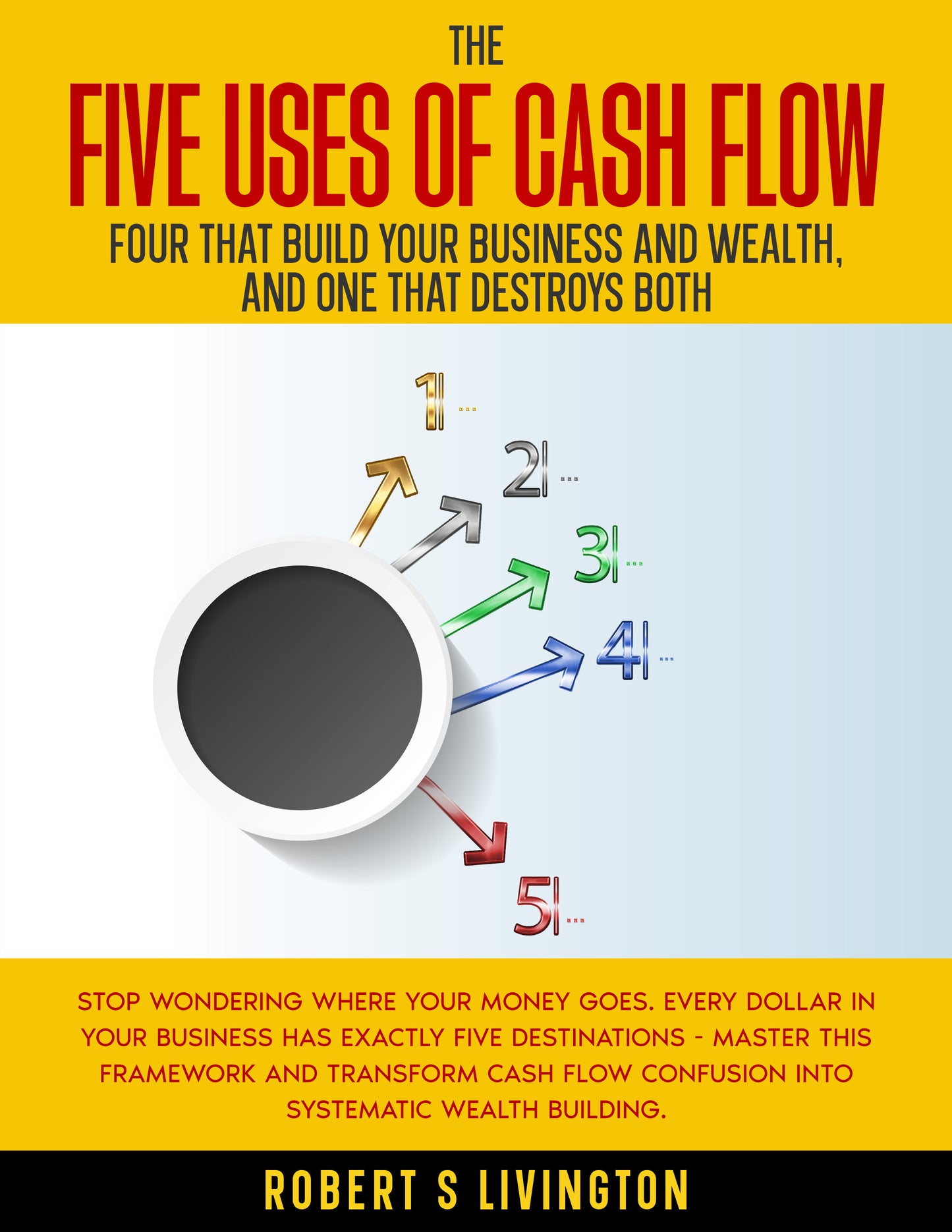
The Five Uses of Cash Flow™
Four That Build Your Business and Wealth—and One That Destroys Both
Better Cash Allocation. Stronger Financial Position. More Options.
Your business works hard to generate cash.
But what happens to that cash after it is generated?
Should you reduce debt? Build reserves? Invest in growth? Take owner distributions?
And how much cash is quietly disappearing through inefficiency, poor decisions, or unnecessary expenses?
The Five Uses of Cash Flow™ introduces a practical framework for answering these questions and making more deliberate decisions about where your business's cash should go.
The framework identifies five fundamental uses of cash flow:
-
Pay Down Debt — Reduce financial obligations and improve future flexibility.
-
Build Cash Reserves — Strengthen financial security and prepare for uncertainty.
-
Fund Growth — Invest in opportunities that can generate sustainable financial returns.
-
Owner Distributions for Wealth — Convert business success into personal financial security.
-
Management Waste — Identify and reduce the unnecessary consumption of cash that undermines the other four uses.
Four uses can strengthen your business and build wealth. The fifth consumes resources without creating corresponding value.
The objective is not simply to generate more cash. It is to make better decisions about how that cash is used.
Because Cash Flow Creates Options™.
What You'll Discover
1. How to Reduce Debt Strategically
Not all debt should be treated equally.
Learn how to evaluate debt based on interest rates, repayment obligations, financial risk, and the opportunities that debt payments prevent you from pursuing.
The guide examines debt prioritization, accelerated repayment strategies, and the trade-offs between paying down debt and retaining cash for other purposes.
2. How to Build Cash Reserves That Protect Your Business
Cash reserves are more than money sitting in a bank account.
They can protect operations during unexpected disruptions, reduce dependence on expensive emergency financing, and allow your business to act when opportunities arise.
Discover how to assess reserve requirements based on operating expenses, seasonality, customer concentration, working capital cycles, and other business risks.
You'll also learn approaches for building, maintaining, using, and replenishing reserves.
3. How to Evaluate Growth Before Committing Cash
Higher sales do not automatically produce stronger cash flow.
Growth often requires additional investment in inventory, receivables, employees, equipment, and facilities before the financial benefits arrive.
The guide explains how to evaluate growth opportunities using cash flow returns, payback periods, investment risks, and realistic financial assumptions.
The objective is growth that strengthens the business rather than growth that creates unnecessary financial pressure.
4. How to Build Owner Wealth Without Weakening the Business
Your business should create financial opportunities for you as well as for the enterprise.
But irregular or excessive distributions can undermine working capital, reserves, and future growth.
Explore the relationship between business financial health, distribution policies, owner wealth creation, and long-term financial independence.
Learn why deliberate distribution decisions should be part of a broader cash allocation strategy.
5. How to Identify and Reduce Management Waste
Management waste is the fifth use of cash flow—and the one owners should work to minimize.
It can appear through purchasing inefficiencies, avoidable operating costs, poor inventory decisions, ineffective processes, and other activities that consume resources without delivering sufficient value.
The guide examines how management waste develops, why it can go unnoticed, and how identifying its underlying causes can improve financial performance.
Reducing management waste makes more cash available for the four productive uses.
Why the Sequence Matters
The Five Uses framework is not simply a list of financial priorities.
It explains why the order and balance of cash allocation decisions matter.
Paying down debt too aggressively can leave a business without sufficient reserves.
Investing in growth too soon can create working capital pressure.
Accumulating excessive reserves can prevent productive investment.
Taking distributions without considering future obligations can weaken the business.
There is no single allocation formula that works for every company.
The guide helps you understand these competing demands and develop an allocation approach appropriate to your business's financial condition, risks, and opportunities.
Included: The Five Uses Cash Flow Diagnostic Tool
15 Minutes to Discover Where Your Cash Flow Is Really Going
Understanding the framework is the first step.
The included diagnostic helps you begin applying it to your own business.
The tool guides you through six activities:
-
Current Cash Flow Snapshot — Establish a starting point for evaluating cash available for allocation.
-
Current Allocation Audit — Examine how cash is being directed across the five uses.
-
Diagnostic Questions — Assess the effectiveness of current allocation decisions.
-
Priority Diagnostic — Identify the areas most in need of management attention.
-
Action Planning — Establish immediate priorities and 90-day allocation goals.
-
Accountability System — Create a schedule for reviewing progress and adjusting decisions.
The diagnostic also includes guidance for interpreting results and identifying potential warning signs.
This turns the publication from a discussion of cash allocation into a practical starting point for evaluating your own decisions.
The diagnostic is a self-directed assessment, not an automated financial analysis or personalized advisory service.
What You Receive
The Five Uses of Cash Flow™ — Digital Executive Guide
Four That Build Your Business and Wealth, and One That Destroys Both
An 80-page digital publication by Robert S. Livingston, Founder of BusinessWiser™.
The publication includes:
-
Five detailed chapters examining each use of cash flow.
-
Financial illustrations and historical business examples.
-
Practical approaches to debt reduction and cash reserve management.
-
Methods for evaluating growth investments and their cash requirements.
-
Discussion of owner distributions and long-term wealth creation.
-
Management waste identification and improvement principles.
-
Guidance on allocation priorities, sequencing, and implementation.
-
The Five Uses Cash Flow Diagnostic Tool, including a 90-day action-planning section and accountability review.
The guide draws on more than four decades of business experience and historical engagement with owner-led small and mid-sized businesses.
This is an educational Executive Guide with an included self-assessment tool. It is not the complete BusinessWiser™ Cash Flow Mastery System.
Frequently Asked Questions
How is this different from budgeting?
Budgeting helps plan and control financial activity.
The Five Uses framework focuses on how available cash should be allocated among competing business and owner priorities.
It helps owners evaluate the financial and strategic consequences of those decisions.
The two disciplines complement each other.
Does the guide recommend eliminating all debt?
No.
The guide recognizes that debt can support productive investments and business growth.
The objective is to evaluate debt intelligently, reduce unnecessary financing costs, and balance repayment with liquidity and investment needs.
Is building cash reserves always the first priority?
Not necessarily.
The appropriate reserve level depends on business risk, cash flow predictability, financing obligations, seasonality, and other factors.
The guide explains why reserve requirements and allocation priorities should reflect the circumstances of the individual business.
Does the publication include a practical tool?
Yes.
The included Five Uses Cash Flow Diagnostic Tool provides a structured way to review current cash allocation, identify priorities, and develop a 90-day action plan.
Who is this Executive Guide designed for?
Owners and executives of established product-based businesses, particularly manufacturing, wholesale and distribution, industrial and commercial products, and consumer packaged goods.
It is especially relevant to owners who generate reasonable profits but want greater clarity about where their cash is going—and whether it is being used effectively.
Is this the complete BusinessWiser™ Cash Flow Mastery System?
No.
The Five Uses of Cash Flow™ is a standalone educational publication with an included diagnostic tool.
The complete Cash Flow Mastery System is a separate product providing integrated frameworks for ongoing cash flow management, forecasting, operating discipline, and business value creation.
The Bottom Line
Generating cash is only half the challenge.
What you do with that cash determines whether today's financial performance contributes to tomorrow's financial strength.
Reduce unnecessary debt.
Build appropriate reserves.
Fund worthwhile growth.
Create sustainable owner wealth.
Eliminate management waste.
The Five Uses of Cash Flow™ gives you a structured way to think through these decisions, understand their trade-offs, and begin establishing clearer priorities.
Because the goal isn't simply to make more money.
It's to build a stronger business, create greater financial security, and preserve the freedom to make choices.
Better Decisions. Stronger Cash Flow. More Options.
Cash Flow Creates Options™
Disclaimer
The materials, systems, and frameworks offered are for educational and informational purposes only. They are designed to support business learning and decision-making and are not intended to provide legal, tax, accounting, or financial advice.
Examples, financial illustrations, historical outcomes, and suggested allocation approaches are not guarantees or predictions of results. Actual outcomes depend on each company's circumstances, management decisions, implementation, and market conditions.
Users should consult qualified professional advisors before making significant business decisions.
Share